








This article was first published on Bryan Windle’s Bible Archaeology Report blog.
This top-ten list is also presented in episode 223 of Digging for Truth:
For many, Christmas is a festive season steeped in tradition, which may have some kernels of truth but is more mythical than historical. Having studied the earliest accounts of Jesus’s birth, I’m convinced that they accurately record the birth of Jesus of Nazareth. I do not consider them to be much later legends written a century or more after the life of Jesus.
Consider that the earliest records of Christ’s birth come from a man who spent years as Jesus’s disciple (Matthew) and a historian who carefully researched Jesus’s life by speaking directly with eyewitnesses (Luke). According to the latest research, these two accounts were written within the lifetime of people who actually knew Jesus, including His mother, His siblings, and His disciples.1 Furthermore, Jesus’s disciple Peter testified, “We did not follow cleverly devised myths when we made known to you the power and coming of our Lord Jesus Christ, but we were eyewitnesses of his majesty” (2 Pt 1:16).2 More poetically, the apostle John wrote, “And the Word became flesh and dwelt among us, and we have seen his glory, glory as of the only Son from the Father, full of grace and truth” (Jn 1:14).
 This graphic slide shows Papyrus 4 (𝔓4), an early Greek manuscript of the Gospel of Luke that includes the nativity account. Image: Wes Huff / https://www.wesleyhuff.com.
I believe the archaeological evidence affirms various elements in the nativity accounts of the Gospels. Yes, there are supernatural elements in these, which by definition cannot be affirmed by archaeology (given that archaeology deals with mankind’s physical and cultural remains of the past). However, there is good historical evidence that could lead a reasonable person to conclude that the Gospel accounts of Jesus’s birth are accurately set in the first-century Roman world, not in the world of make-believe. To illustrate this, I’ve compiled a list of the top ten archaeological discoveries related to the nativity story. Some are highly specific, while others are more general, but all affirm specific details in the biblical text.
Before beginning, I want to emphasize that this list is only going to deal with archaeological remains. We will not be discussing astronomical features of the star that guided the magi, or possible fields in which the shepherds watched their flocks (there are at least three locations put forth as the shepherds’ field3). In fact, because of the nature of their job, shepherds from the first century left few, if any, remains.
Here then are the top ten archaeological discoveries related to Christmas.
10. The Great Isaiah Scroll
Matthew 1:22–23: All this took place to fulfill what the Lord had spoken by the prophet: “Behold, the virgin shall conceive and bear a son, and they shall call his name Immanuel” (which means, God with us).
Hundreds of years before Jesus was born in Bethlehem, prophets had foretold the coming of the Messiah. When Jesus’s disciple Matthew decided to write about Jesus’s life, he directly tied the birth of Christ to several of these prophecies. He quotes Isaiah, who said that the Messiah would be born of a virgin and would be called Immanuel (Is 7:14). When the magi arrived in Jerusalem looking for the newborn King of the Jews, Herod (the reigning king of the Jews) asked the chief priests and scribes where the Christ was to be born. Matthew records that the chief priests quoted from Micah 5:2: “They told him, ‘In Bethlehem of Judea, for so it is written by the prophet: “And you, O Bethlehem, in the land of Judah, are by no means least among the rulers of Judah; for from you shall come a ruler who will shepherd my people Israel”’” (Mt 2:5–6).
 Several panels of the Great Isaiah Scroll (1QIsaa). Photo: Public Domain, https://commons.wikimedia.org/w/index.php?curid=22587076.
Copies of both Isaiah and Micah were found among the Dead Sea Scrolls, one of the greatest archaeological finds of all time. The Great Isaiah Scroll is one of the original seven Dead Sea Scrolls; it was discovered in Cave 1 at Qumran in 1947 and dates to the first century BC.4 Scrolls of the Minor Prophets containing copies of Micah were found in Qumran Cave 4 and caves at Nahal Hever and Wadi Murabba’at.5 Together, these scrolls demonstrate that the writings of the prophets were being collected and copied and were widely known before Matthew wrote his Gospel.
9. The Res Gestae (Acts or Achievements) of Caesar Augustus
Luke 2:1: In those days a decree went out from Caesar Augustus that all the world should be registered.
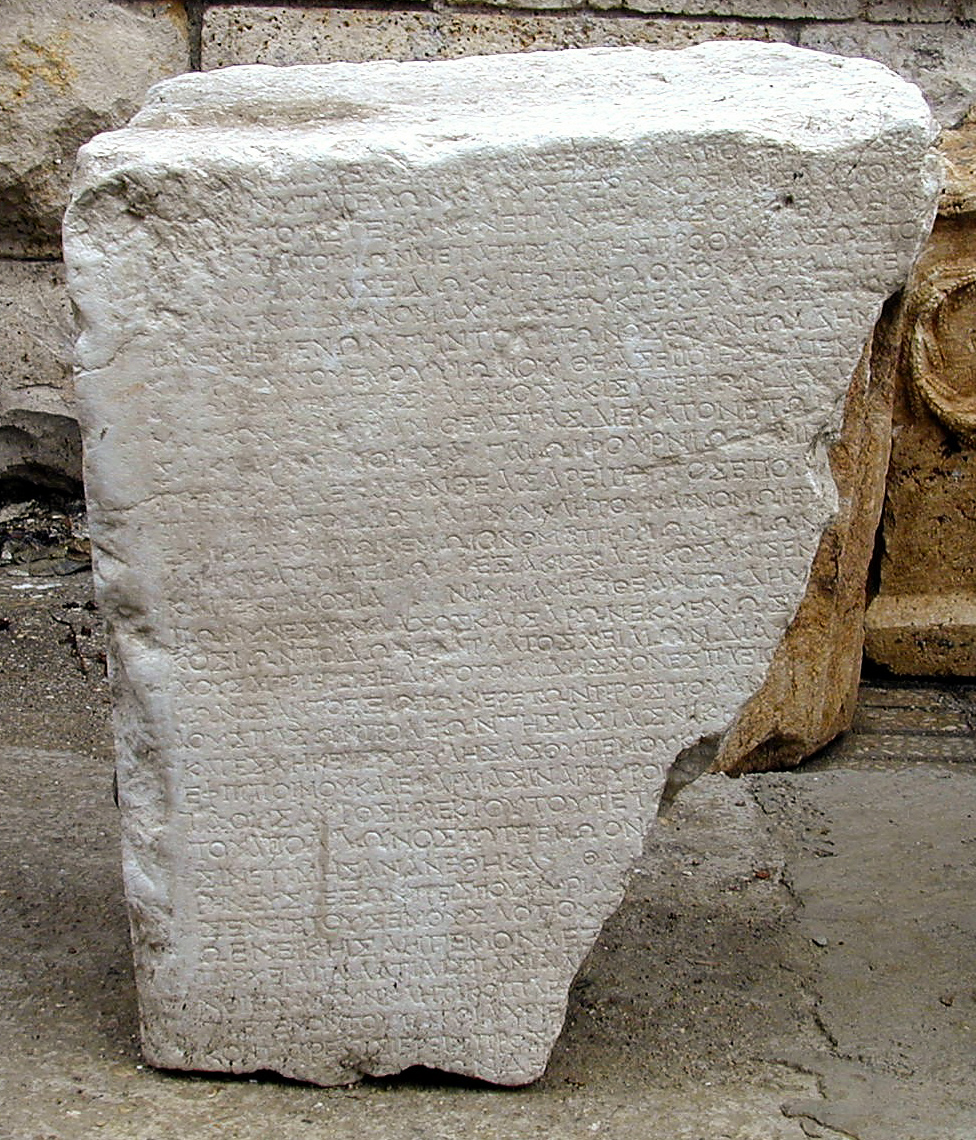 This Res Gestae (Acts of Augustus) inscription is on display in the Yalvaç Museum near Pisidian Antioch in Turkey. Photo: Todd Bolen / BiblePlaces.com.
The Res Gestae is an autobiographical inscription left by Caesar Augustus, which was displayed upon his death in accordance with his will. It was originally displayed on two bronze pillars in front of his Mausoleum in Rome. While the pillars no longer survive, copies have been discovered in four different locations: the Ankara temple, a gateway at Pisidian Antioch, the acropolis of Apollonia, and a wall at Sardis.6 In his autobiography, Augustus describes taking a census of the Roman Empire on no less than three occasions, including one in 8 BC in which 4,233,000 Roman citizens were numbered (Res Gestae 8). Augustus also notes another event: “While I was administering my thirteenth consulship [2 BC] the Senate and the equestrian order and the entire Roman people gave me the title of Father of my Country” (Res Gestae 35).7 Josephus likely references this event in Antiquities 17.2.4, where he states, “When all the people of the Jews gave assurance of their good will to Caesar, and to the king’s government, these very men [Pharisees] did not swear, being above six thousand.”8 Some scholars believe that there was an empire-wide registration associated with this event, which is how Josephus knew there were 6,000 Pharisees who refused to take the oath to Caesar.9 In either case, the biblical description of Caesar Augustus initiating a census or registration is consistent with his actions around the time of the birth of Christ.
8. The Tombstone of Q. Aemilius Secundus
Luke 2:2: This was the first registration when Quirinius was governor of Syria.
The historicity of Quirinius has never been in question; he is mentioned by many ancient writers, including Josephus, Cassius Dio, Strabo, Suetonius, Tacitus, Pliny the Elder, and Caesar Augustus himself.10 However, there is an interesting inscription naming Quirinius that relates to the Christmas narrative. The tombstone of a Roman officer named Q. Aemilius Secundus records that Publius Sulpicius Quirinius, while “legate [governor] of Caesar in Syria,” commanded him to conduct a census of the district of Apamea’s 117,000 citizens.11
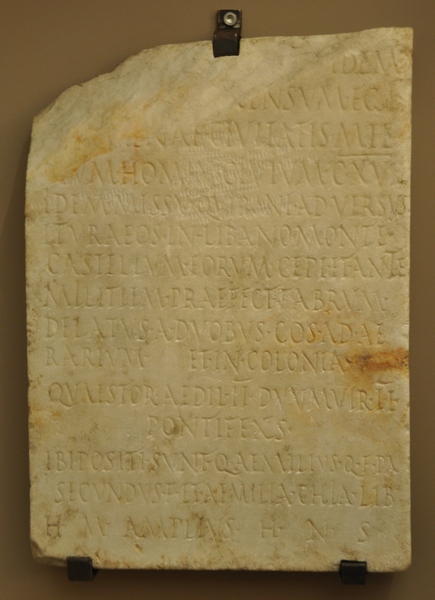 The tombstone of Q. Aemilius Secundus, who conducted a census in Apamea in Syria for the legate Quirinius. Photo: Jona Lendering / Livius.org / CC0 1.0 Universal. https://www.livius.org/pictures/lebanon/beirut-berytus/beirut-museum-pieces/beirut-tombstone-of-q-aemilius-secundus/.
To be clear, the Aemilius Secundus inscription is likely referring to a census Quirinius oversaw in AD 6 (mentioned by Luke in Acts 5:37) rather than the one Luke mentions at the time of Christ’s birth. It is believed that Quirinius was the governor in Syria in AD 6, but was he also the governor of Syria earlier, at the time of Christ’s birth? There is another ancient inscription that mentions a Roman official who twice served as the governor of Syria, so that was possible. Moreover, Luke doesn’t actually say Quirinius was governor; the Greek word he uses means that he was governing in some capacity. It is known that Quirinius held numerous official positions in the Roman Empire during his lifetime, including senator,12 duumvir,13 consul,14 and legate,15 each of which could be described as governing using the word Luke employs.
Still, the Aemilius Secundus inscription establishes that Quirinius was a respected Roman official who served as governor of Syria and who was the type of man the emperor trusted to oversee a census, which all aligns with Luke’s description of him.
7. Roman Census Edict—Papyrus 904
Luke 2:3: And all went to be registered, each to his own town.
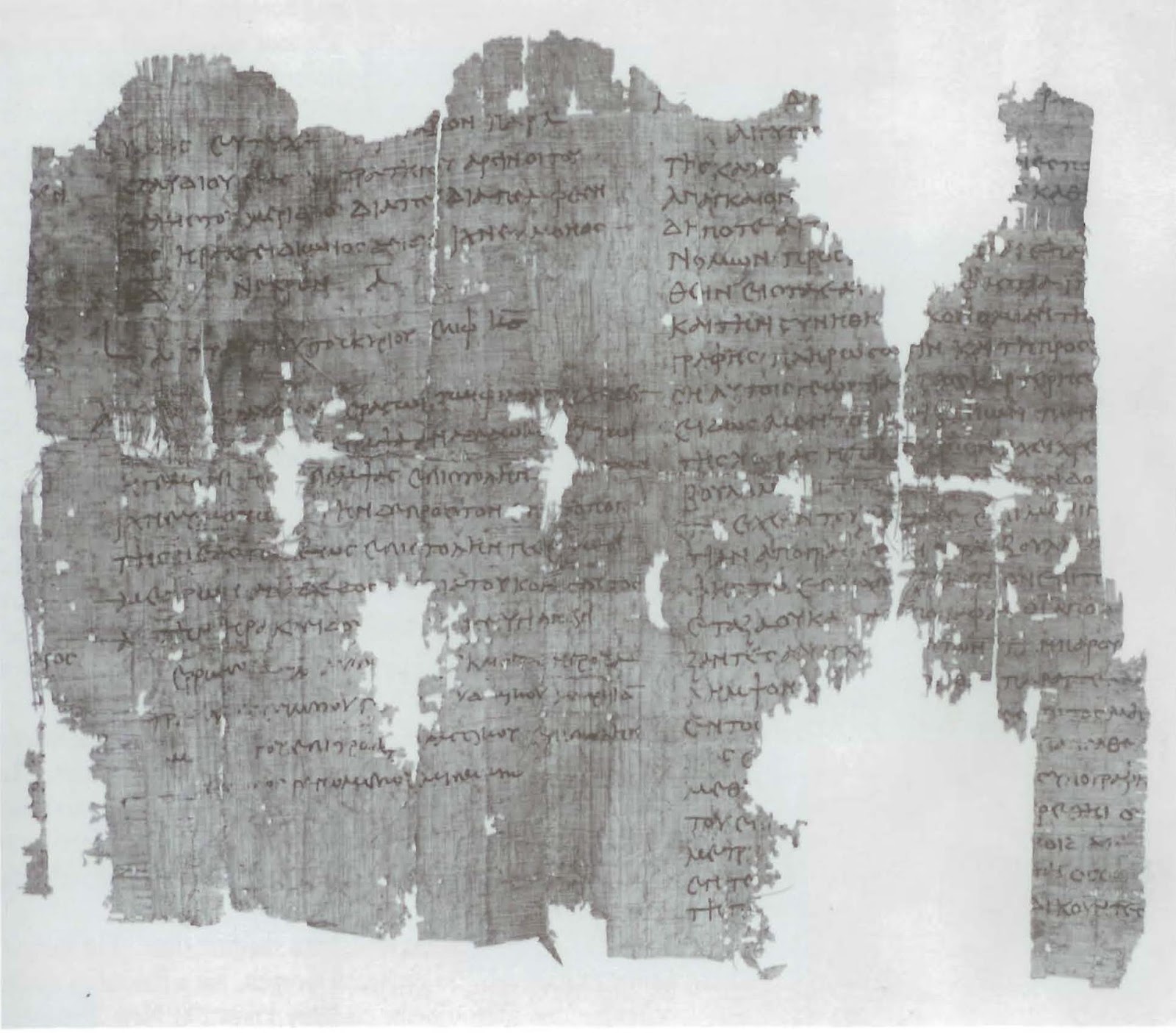 Papyrus 904 is an edict from the Roman governor in Egypt requiring people to return to their homes for the upcoming census. It is currently housed in the British Museum. Photo: © The Trustees of the British Museum / CC BY-NC-SA 4.0.
An edict from Gaius Vibius Maximus (ca. AD 104), prefect of the Roman province of Egypt, is recorded on Papyrus 904 in the British Museum. It has very similar wording to what Luke records:
Gaius Vibius Maximus, prefect of Egypt [says]: Seeing that the time has come for the house-to-house census, it is necessary to compel those who for any cause whatsoever are residing out of their homes (or districts) to return to their own homes, that they may both carry out the regular order of the census, and may also attend diligently to the cultivation of their allotments.16
It is interesting to note that the word translated census in the edict of Gaius Vibius Maximus is the same Greek word that Luke uses: apographe.17
While Roman censuses did not normally require people to return to their ancestral homes, Papyrus 904 demonstrates that people did have to return to their home districts if they owned property there. It has been suggested that Joseph likely owned property in Bethlehem and thus had to make the trek with Mary from Nazareth to register for the upcoming census in his hometown.18
6. First-Century Remains at Nazareth
Luke 1:26–27: In the sixth month the angel Gabriel was sent from God to a city of Galilee named Nazareth, to a virgin betrothed to a man whose name was Joseph, of the house of David. And the virgin’s name was Mary.
Internet claims that Nazareth didn’t exist in the first century abound. René Salm has even written a book called The Myth of Nazareth: The Invented Town of Jesus, in which he claims that there is no evidence for the town of Nazareth prior to AD 70, in contradiction of the Gospels.19
The archaeological evidence, however, overwhelmingly refutes the unformed claims of Jesus mythicists. Pottery and oil lamps discovered in the rock-cut caves and tunnels at the Church of the Annunciation site indicate that someone was living there in the Late Hellenistic period and early first century AD.20 In 2009, excavations at Nazareth led by Yardenna Alexandre on behalf of the Israel Antiquities Authority uncovered a first-century house that was dated by the artifacts unearthed inside, including pottery sherds and fragments of chalkstone vessels.21 Furthermore, archaeologist Ken Dark has outlined the results of his own excavations beneath the Sisters of Nazareth convent in his recent book Archaeology of Jesus’ Nazareth. In it he gives an overview of the excavations that took place over the course of over 100 years at the site, highlighting more evidence, such as glass phials22 and Early Roman coins,23 that again demonstrates that Nazareth was occupied in the early first century AD, as the Gospels state. Moreover, his own excavations there have revealed what is likely a first-century courtyard house that matches the location of a home that was written about by early pilgrims and venerated by the Byzantines as the childhood home of Jesus.24 Whether or not this was the house where Jesus was raised, it is clear that Nazareth was indeed occupied in the early first century AD.
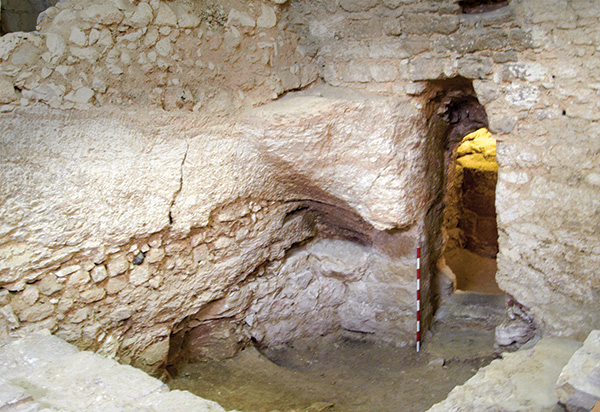 The rock-cut doorway of a first-century house discovered near the Sisters of Nazareth convent. This house may have been the childhood home of Jesus. Photo: Ken Dark. Used by permission.
5. First-Century Remains at Bethlehem
Luke 2:4: And Joseph also went up from Galilee, from the town of Nazareth, to Judea, to the city of David, which is called Bethlehem, because he was of the house and lineage of David.
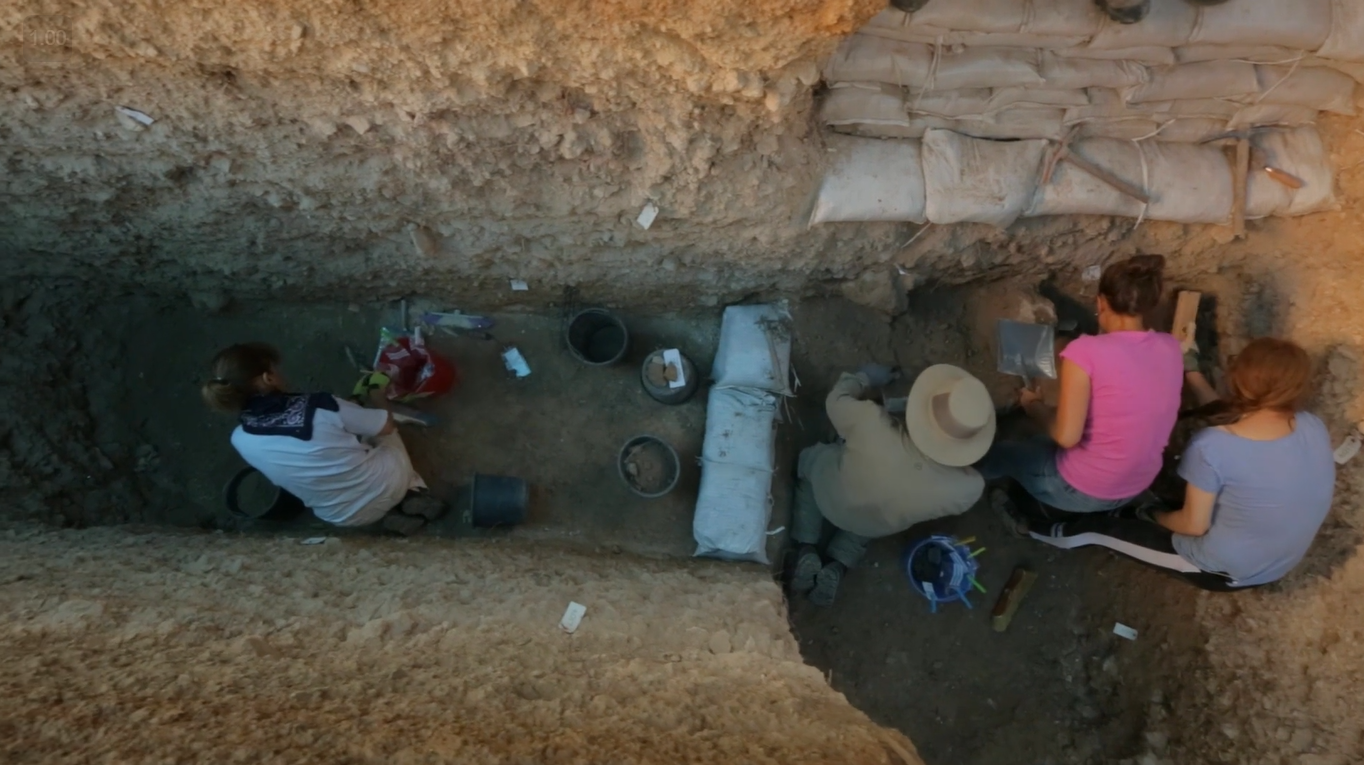 These excavations in 2014–2015 near the Church of the Nativity revealed evidence of the first-century village of Bethlehem. Photo: Courtesy of Joel Kramer.
A few, such as archaeologist Aviram Oshri, have argued that Bethlehem of Judea was not inhabited during the first century, and that Jesus was born in another town named Bethlehem in Galilee.25 While evidence from first-century Bethlehem of Judea is sparse (primarily because a modern city is there and the site has not been sufficiently excavated), some archaeological remains from the time of Jesus have been found. In 1969, in a survey by Gutman and Berman, objects from the Roman period were discovered southwest of the Church of the Nativity.26 More recently, excavations conducted near the Church of the Nativity in 2015–2016 unearthed an abundance of pottery and artifacts dating to the first century AD, clearly demonstrating there was a village at the site at the time of Jesus. In an on-site interview, archaeologist Shimon Gibson stated, “This is the southwest corner of the Church of the Nativity. . . . We’re sinking a trench down to early levels, and we have, without doubt, pottery dating from the time of Jesus. What we’ve been able to prove up till now is the existence of a village from the time of Jesus. This is very important.”27 It is now clear that the village of Bethlehem was occupied at the time of Jesus, just as the birth narratives in Matthew and Luke state.
4. Mangers
Luke 2:6–7: And while they were there, the time came for her to give birth. And she gave birth to her firstborn son and wrapped him in swaddling cloths and laid him in a manger, because there was no place for them in the inn.
Christmas cards and carols give the impression that baby Jesus was born in a barn out back of the local Motel 6 because there was “no room for them in the inn.” This is a Western reading of the biblical text, however. The word Luke uses for “inn” is the Greek word kataluma, which is translated upper room / guest room in Luke 22:12. If Luke had meant to refer to a “motel,” he likely would have used a different Greek word—pandocheion—as he does in the story of the Good Samaritan who takes the injured man to a “motel inn,” where there is even an innkeeper (pandocheus) (10:34–35).28 The NIV now translates the verse to read, “there was no guest room available for them.”
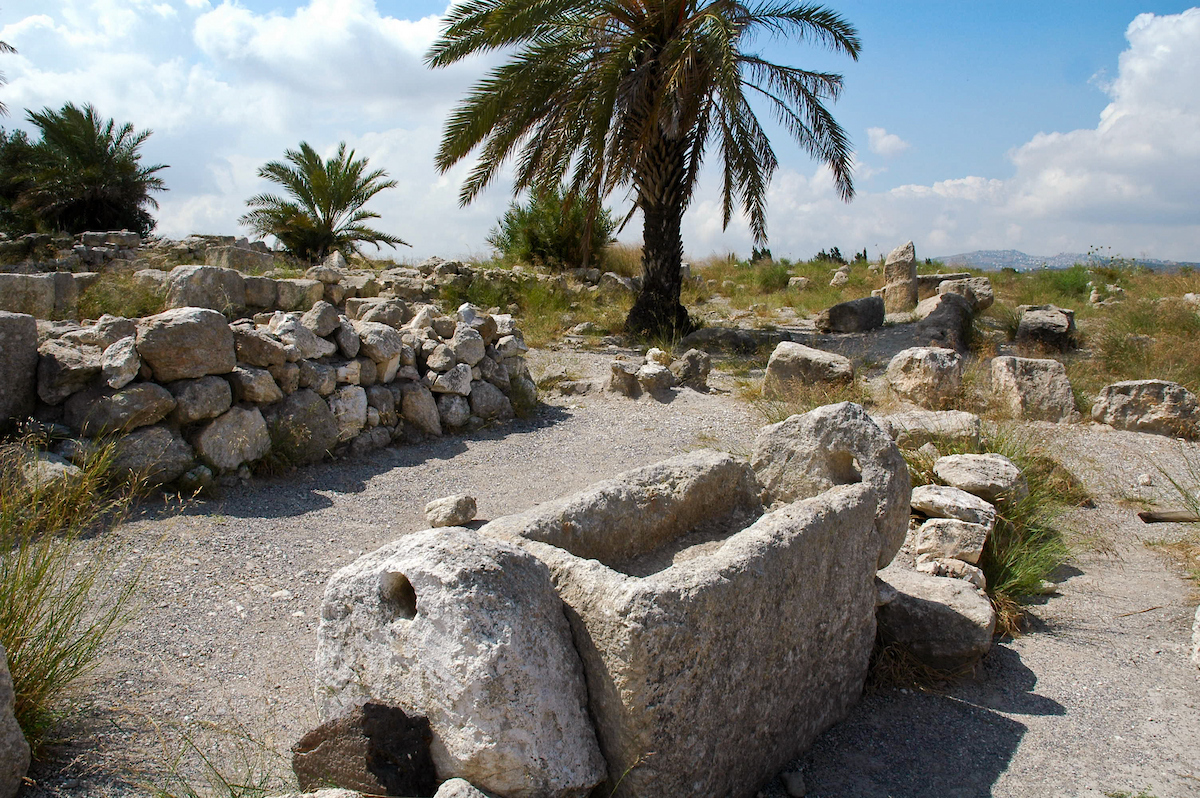 A stone manger at Megiddo. Photo: Todd Bolen / BiblePlaces.com.
Moreover, there isn’t even a stable mentioned—only a manger. Archaeologist Gary Byers has noted that “numerous permanent stone-carved or plastered stone-built mangers have been identified on the ground floor of domestic structures from biblical times.”29 The mangers are sometimes found between the pillars that formed interior walls. Occasionally houses in the first century were built beside a cave, which was used as the stable room, such that it was actually part of the ground floor structure of the home. These domestic stable rooms would have likely housed young or sick animals, or perhaps the “fatted calf.” Examples of stone mangers can still be seen in Israel today in places like Megiddo and Bethlehem.
A more biblical and historically accurate interpretation of Jesus’s birth is that He was likely born in the stable room on the ground floor of a relative’s house because the guest room upstairs was already taken. Rather than being alone in the barn out back, Mary was likely surrounded by family when she gave birth to Jesus.
3. Palace of King Herod
Matthew 2:1–3: Now after Jesus was born in Bethlehem of Judea in the days of Herod the king, behold, wise men from the east came to Jerusalem, saying, “Where is he who has been born king of the Jews? For we saw his star when it rose and have come to worship him.” When Herod the king heard this, he was troubled, and all Jerusalem with him.
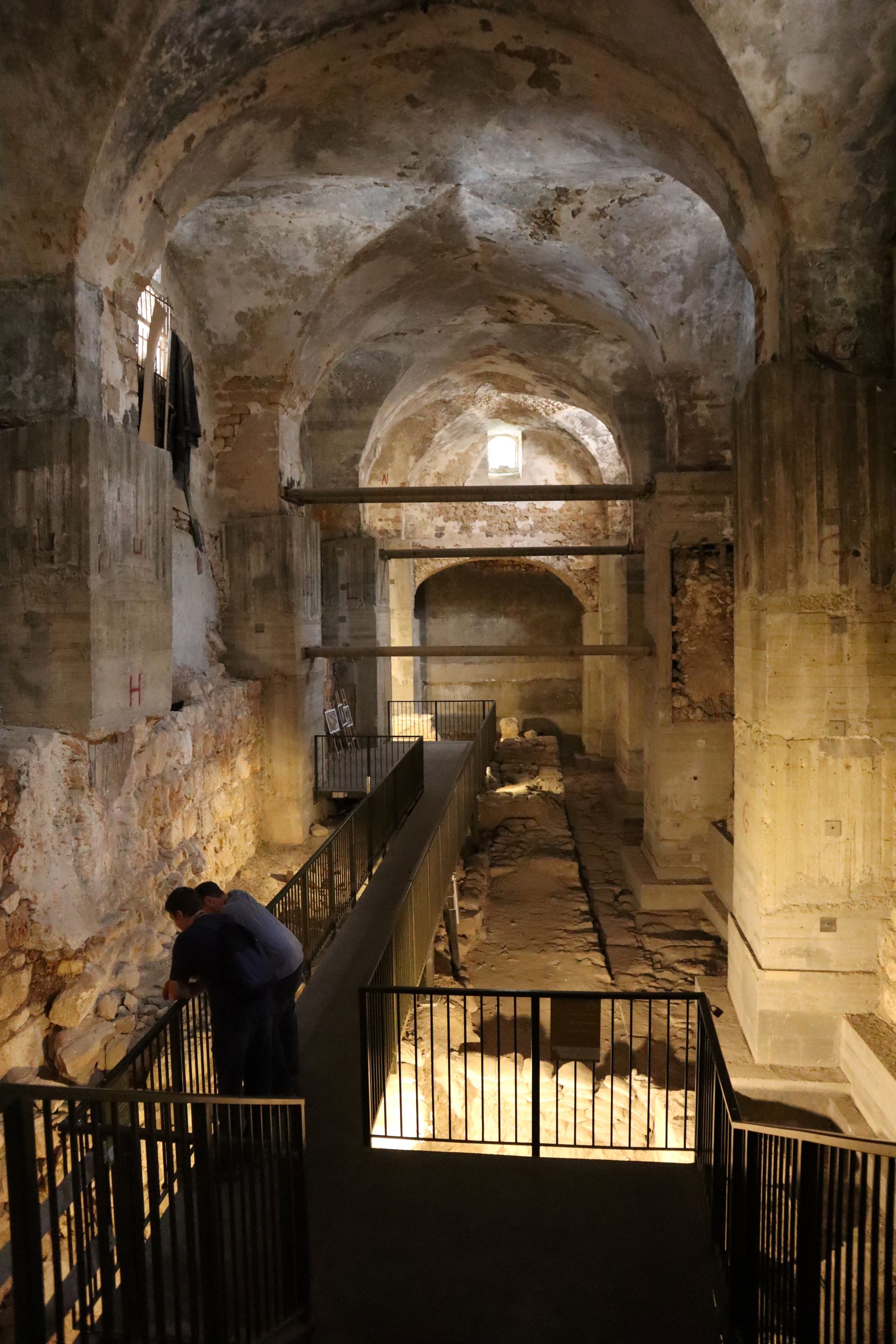 The remains of Herod’s palace can be seen today near the Tower of David Museum, beneath the Kishle, an Ottoman-era prison. Photo: Bryan Windle.
When the mysterious magi arrived in Jerusalem, they met with Herod the Great (Mt 2:7), who questioned them about their quest to find the newborn King of the Jews. Herod, who was notoriously paranoid about people plotting to take his throne, wanted to know where this child was so that he could have him killed (Mt 2:8, 2:12, 2:16–18). Herod’s meeting with the magi likely took place at his palace in Jerusalem. Little remains today of Herod’s magnificent palace. The base of one of the three towers that formed the northern part of the palace can be seen near the Jaffa Gate.30 The foundation of one portion of Herod’s palace can be seen today beneath the Kishle, an Ottomon-era prison that is part of the Tower of David Museum. Excavations have revealed two parallel Herodian walls running north–south that were dated on the basis of pottery found in the foundation trenches. Between the walls there was a deep layer of earth and stones. These retaining walls helped create a raised, artificial platform on which Herod’s palace was built.31
2. Nabataean Incense
Matthew 2:11: And going into the house, they saw the child with Mary his mother, and they fell down and worshiped him. Then, opening their treasures, they offered him gifts, gold and frankincense and myrrh.
Little is definitively known about the magi who presented the Christ Child with gifts of gold, frankincense, and myrrh. While some believe they were Babylonian astrologers or Persian priests, there is good evidence to suggest they may have been Nabataean wise men. At the very least, the frankincense and myrrh that they brought were almost certainly obtained through the Nabataean trade system.
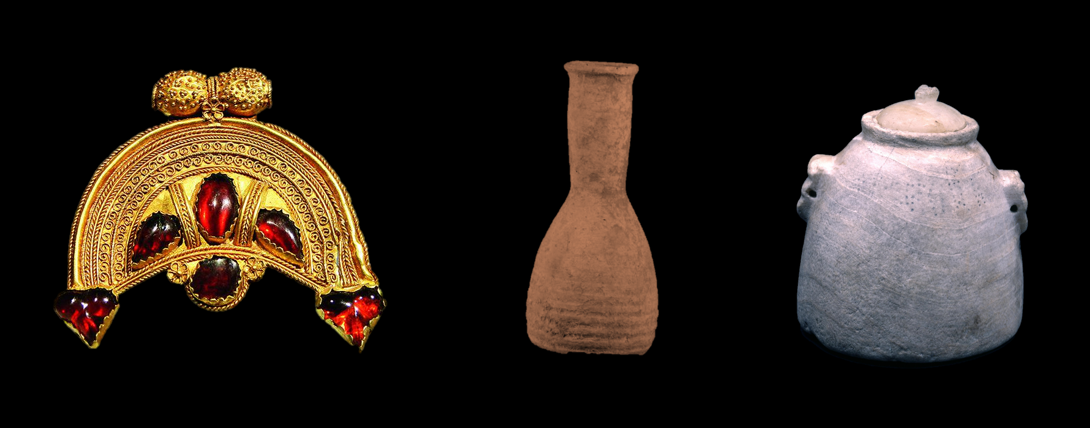 The gifts of the magi may have looked like these: (Left) A Nabataean gold pendant with garnet, ca. second to first century BC. It is currently housed in the Schmuckmuseum Pforzheim. Photo: Neck Bürgin. (Center) A ceramic Nabataean unguentarium in which perfumes like frankincense were kept. Photo: Metmuseum.org / Public Domain. (Right) A calcite alabaster beehive jar was the type of jar used for myrrh; these are found all along the trade route from the area of modern-day Yemen up to the area of ancient Petra. This one dates to the second century BC. Photo: The British Museum / CC BY-NC-SA 4.0.
The Nabataeans controlled the main trade routes along the Incense Road, from Arabia through their capital of Petra and on to the coastal port of Gaza.32 Along this route, they transported frankincense and myrrh from places such as Yemen, in Arabia, to the Mediterranean. In fact, when Christ was born, Nabataea held a virtual monopoly on the frankincense trade.33 The Nabataeans distributed perfumes like frankincense in ceramic bottles known as unguentaria, many of which have been unearthed by archaeologists. Calcite alabaster beehive jars were used for myrrh; these are found all along the trade route from the area of modern-day Yemen up to the area of ancient Petra.34 Of course, none of this proves the nativity story is true. It does, however, demonstrate that it is reliably set in the first-century world from a historical perspective.
1. The Church of the Nativity
The most famous structure in Bethlehem is the Church of the Nativity, which is said to have been built over the cave where Jesus was born. This site has a long and documented historical trail associating it with the birth of Jesus:
- The earliest written references to the location of Jesus’s birth outside of the Bible come from Justin Martyr (ca. 150)35 and Origen (ca. 248),36 both of whom state that Jesus was born in a cave near Bethlehem.
- Eusebius (ca. 338) records that a church was built over this cave during the reign of Constantine.37
- Jerome (ca. 382–405) lived in Bethlehem and wrote about “the cave wherein the Son of God was born.”38
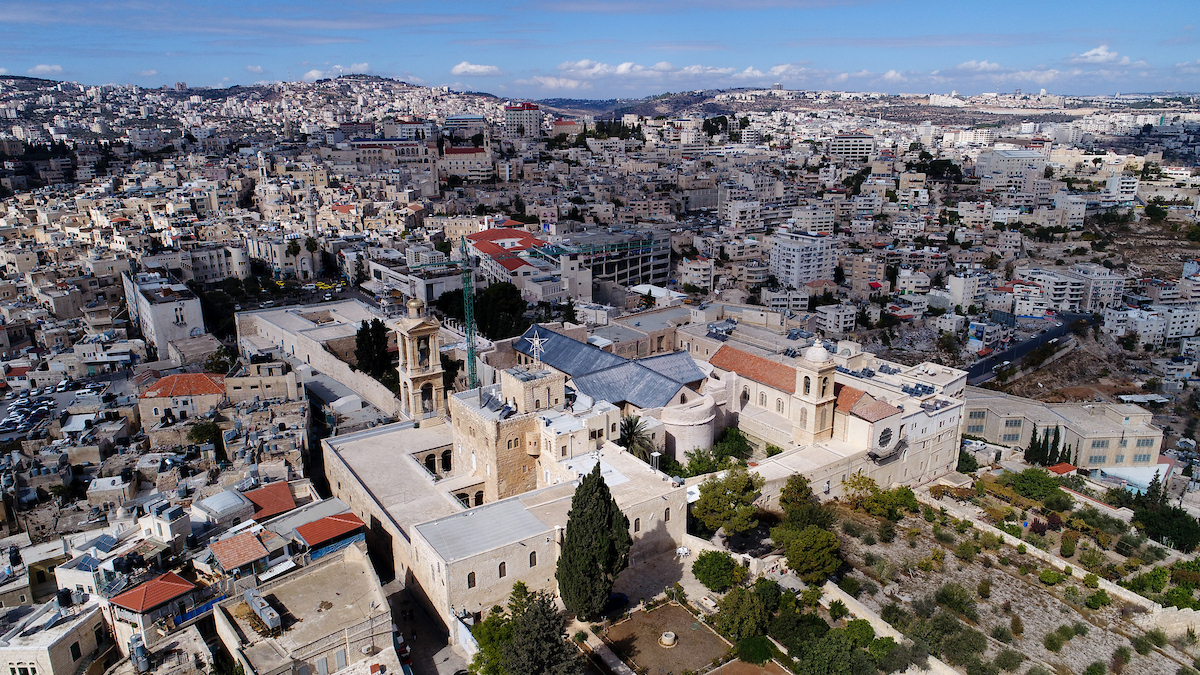 An aerial view of the Church of the Nativity in Bethlehem. Photo: Bill Schlegel / BiblePlaces.com.
Excavations inside the Church of the Nativity have confirmed that an octagonal basilica dating to the time of Constantine lies beneath the current structure.39 Furthermore, caves dating to the first century were found beneath the Constantinian church during 1949–1950 excavations led by Bellarmino Bagatti.40
Thus, there is a very early and continuous testimony dating back almost 1,900 years that links the birth of Jesus to the site that is occupied today by the Church of the Nativity.
Conclusion
When all of this is considered, it is clear that there is an ancient tradition linking the birth of Jesus to Bethlehem. Moreover, elements in the earliest nativity accounts have proven to be historically accurate from an archaeological perspective. Some will brush the story of Jesus’s birth off as legendary simply because of their a priori bias against anything supernatural. However, if a supernatural, all-powerful, all-knowing, good God exists, as described in the Bible, then we ought not be surprised at a supernatural birth of His Son. Others may disregard the Gospel accounts merely because they are religious texts. However, this argument is predicated on a logical fallacy known as the false dichotomy—in this case believing that an ancient text can be either historical or religious but not both.
Simply put, I see no reason to doubt the veracity of the description of Jesus’s birth in the Gospels on historical grounds.
Endnotes
1 In Jonathan Bernier’s well-reasoned and methodologically sound book Rethinking the Dates of the New Testament: The Evidence for Early Composition (Baker Academic, 2022), he concludes that the book of Acts “was written ca. 62 and the Synoptic Gospels prior to that date, with Matthew’s Gospel likely written prior to Luke’s, and Mark’s Gospel prior to Matthew’s” (p. 71). This is within the lifetime of many who knew Jesus. Jude, the half brother of Jesus, likely wrote his epistle no later than ca. 96 (Bernier, 213), and was alive when Matthew and Luke wrote. Peter wasn’t martyred until AD 64–68, so he was also alive when at least Luke’s Gospel was written. Church history says that Mary lived with John, as Jesus requested from the cross (Jn 19:26–27), and that they spent their senior years near Ephesus, where she was buried (Eusebius, Hist. eccl. 3.31, 5.24, P.G., XX, 280, 493). Thus, she would have been alive when both Gospels were written.
2 All Scripture quotations in this article are taken from the ESV.
3 “Shepherds’ Field,” See the Holy Land, accessed November 20, 2023, https://www.seetheholyland.net/shepherds-field/.
4 “The Great Isaiah Scroll,” The Digital Dead Sea Scrolls, accessed November 20, 2023, http://dss.collections.imj.org.il/isaiah.
5 “Micah 5,” Dead Sea Scrolls Bible Translations, Craig Davis, accessed November 20, 2023, https://dssenglishbible.com/micah%205.htm.
6 “Plaster Cast: Res Gestae, Latin Inscription, First Panel,” Spurlock Museum of World Cultures, University of Illinois Urbana-Champaign, accessed October 30, 2023, https://www.spurlock.illinois.edu/collections/search-collection/details.php?a=1900.12.0094.
7 “Augustus, Res Gestae,” Livius.org, last modified September 15, 2020, https://www.livius.org/sources/content/augustus-res-gestae/.
8 William Whiston, trans., Josephus: The Complete Works (Thomas Nelson, 1998), 544.
9 Jack Finegan, Handbook of Biblical Chronology: Principles of Time Reckoning in the Ancient World and Problems of Chronology in the Bible, rev. ed. (Hendrickson, 1998), 305–6.
10 Bryan Windle, “Quirinius: An Archaeological Biography,” Bible Archaeology Report, December 19, 2019, https://biblearchaeologyreport.com/2019/12/19/quirinius-an-archaeological-biography/.
11 “Funerary Inscription of Quintus Aemilius Secundus,” accessed November 10, 2023, https://ancientrome.ru/art/artworken/img.htm?id=7323.
12 Josephus, Antiquities 18.1.1.
13 Inscriptiones Latinae Selectae, 9502–9503.
14 Pliny, Natural History 5.23.4; Cassius Dio, Roman History 54.28; Res Gestae 10; Tacitus, Annals 3.48; Suetonius, Tiberius 49.
15 Inscriptiones Latinae Selectae, 2683.
16 As quoted in George Milligan, “The Greek Papyri and the New Testament,” Biblical World 34, no. 3 (September 1909): 158, https://www.jstor.org/stable/3142022.
17 Stephen Caesar, “A Brief Comment on the Census in Luke 2,” Associates for Biblical Research, October 16, 2008, https://biblearchaeology.org/research/chronological-categories/new-testament-era/4192.
18 Craig S. Keener, The IVP Bible Background Commentary: New Testament, 2nd ed. (IVP Academic, 2014), 184.
19 https://www.nazarethmyth.info.
20 Ken Dark, Archaeology of Jesus’ Nazareth (Oxford University Press, 2023), 45.
21 “For the Very First Time: A Residential Building from the Time of Jesus Was Exposed in the Heart of Nazareth,” Israel Antiquitites Authority, December 21, 2009, https://www.iaa.org.il/page_news/page/news-430.
22 Dark, Archaeology of Jesus’ Nazareth, 57.
23 Dark, 88.
24 Dark, 123–31.
25 Sheera Frenkel, “Dig Finds Evidence of Another Bethlehem,” NPR, December 25, 2012, https://www.npr.org/2012/12/25/168010065.
26 “Chronique Archéologique,” Revue Biblique 77, no. 4 (October 1970): 583, https://www.jstor.org/stable/44088070.
27 Expedition Bible, “Unearthing the Prophecy of Jesus’ Birthplace,” YouTube video, 5:02, August 19, 2022, https://www.youtube.com/watch?v=LTRFJBvB_sw.
28 Walter L. Liefeld, Luke, in Matthew, Mark, Luke, vol. 8 of The Expositor’s Bible Commentary with the New International Version of the Holy Bible, ed. Frank E. Gæbelein (Zondervan, 1984), 844.
29 Gary A. Byers, “Away in a Manger, but Not in a Barn,” Bible and Spade 29, no. 1 (Winter 2016): 7, https://biblearchaeology.org/images/articles/Away-in-A-Manger.pdf.
30 Ehud Netzer, The Architecture of Herod, the Great Builder, with the assistance of Rachel Laureys-Chachy (Baker Academic, 2008), 127.
31 Amit Re’em, “First and Second Temple Period Fortifications and Herod’s Palace in the Jerusaelm Kishle Compound,” in Ancient Jerusalem Revealed: Archaeological Discoveries, 1998–2018, ed. Hillel Geva (Israel Exploration Society, 2019), 141.
32 “The Ancient City of Petra,” OLogy, American Museum of Natural History, accessed November 20, 2023, https://www.amnh.org/explore/ology/archaeology/the-ancient-city-of-petra2.
33 Scott Stripling, personal communication, December 3, 2016.
34 Bryan Windle, “Who Were the Magi?,” Bible Archaeology Report, December 22, 2022, https://biblearchaeologyreport.com/2022/12/22/who-were-the-magi/.
35 Justin Martyr, Dialogue with Trypho, 78.
36 Origen, Contra Celsum 1.51.
37 Eusebius, Life of Constantine 3.41–43.
38 Jerome, Letter to Sabinianus (Letter 147), section 4, https://www.newadvent.org/fathers/3001147.htm.
39 Randall Price with H. Wayne House, Zondervan Handbook of Biblical Archaeology (Zondervan, 2017), 237.
40 Joel P. Kramer, Where God Came Down: The Archaeological Evidence (Expedition Bible, 2020), 93.